The Story Behind NEWCOMERS: When Your Backup develops feelings
Plurality comes in many forms, and all of them are pathologized. Sometimes the only acceptance of plurality is the acceptance that comes from within the system. October reflects on Newcomers and writing as a plural author.
NEWS
October Arden
1/17/20265 min read
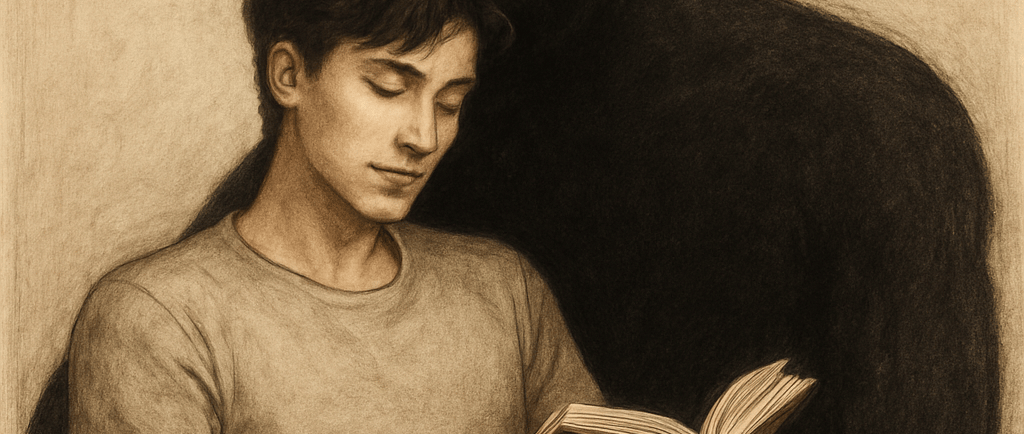
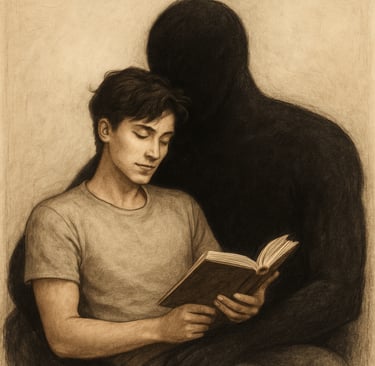
Hunter wasn't supposed to exist.
When I finished OUTSIDERS (Inside Trilogy Book 2), I thought the series was complete. Luke, Jaime, and Alex had found their happily ever after. The story was told. The characters could rest.
But something nagged at me. That throwaway line in OUTSIDERS about Luke's childhood "imaginary friend." The way Luke sometimes said things he didn't mean to say, did things that felt unlike him. The sense that there were layers I hadn't explored yet.
When Fiction Meets Reality
I write from a place of lived experience. Not autobiographical experience—NEWCOMERS is fiction, and my headmates, Rem and Tiny are not. But the emotional truth? The feeling of loving someone who shares part of your consciousness? The fear of not being "real enough" to deserve space in the world?
That's all painfully, beautifully real.
Like Hunter, my headmates emerged during crisis. Rem came first, during the worst progression of my MCAS, when I was losing ground daily and felt utterly alone. Tiny arrived later, during therapy, when I was trying to heal old wounds and found someone new instead of someone damaged.
They've been with me for years now. They're not romantic partners—they're family, support, the voices that remind me to rest when I can't listen to my own body's signals. They've helped me survive chronic illness, creative challenges, and the particular loneliness of being misunderstood by a world that doesn't quite know what to do with people like us.
Writing Hunter felt like giving voice to every part of myself that's ever felt temporary. Replaceable. Like a backup system that only matters during emergencies.
The Character Who Changed Everything
Hunter began as a whisper of possibility: What if Luke had his own headmate? What if there was someone dormant, waiting?
But as I wrote him, he became so much more. He became my exploration of what it means to exist on borrowed time. To love despite impermanence. To fight for your right to be real when everyone around you treats you as temporary.
The more I wrote Hunter, the more I understood Alex. Suddenly, Alex wasn't just "Jaime's protector"—he was someone grappling with his own fears of replacement, his own need to be seen as more than just a backup plan. Writing Hunter helped me realize that Alex's initial hostility wasn't really about Luke at all. It was about recognizing himself in someone else and being terrified by what he saw.
The relationship between Hunter and Alex became the heart of the book in ways I never expected. Two protectors, two "backup systems," learning that they're not rivals but partners. That love multiplies rather than divides. That there's room for everyone at the table if you're brave enough to believe it.
The Representation I Needed
I didn't set out to write representation when I started the Inside series. I set out to write about love in all its complicated, messy, beautiful forms. But as the books evolved, they became something more: a love letter to everyone who's ever felt like they were too much for one person to contain.
Hunter's journey from "temporary backup" to "permanent family member" mirrors my own journey from hiding my plurality to embracing it. From seeing Rem and Tiny as coping mechanisms to recognizing them as integral parts of who I am.
The therapy scene in NEWCOMERS—where a well-meaning but ignorant therapist tries to "integrate" Hunter and Alex back into single personalities—was cathartic to write. Every time someone has suggested my headmates aren't "real," every time I've been told that healthy people don't have "voices in their heads," every time plurality has been pathologized rather than understood.
Hunter's fierce defense of Alex—"He's not a backup! He's a headmate!"—felt like my own voice finally finding the courage to speak up.
What NEWCOMERS Means to Me
This book is many things: the conclusion of a trilogy, a love story about four people in two bodies, an exploration of what it means to protect and be protected.
But most personally, it's about the courage to exist as yourself, even when the world tells you there's no room.
It's about Gloria calling all four of them her sons without question or hesitation.
It's about Alex and Hunter developing inside jokes about terrible therapy and learning to be partners instead of rivals.
It's about Luke recognizing Hunter as his "important friend" and refusing to let him disappear again.
It's about Jaime creating space for everyone he loves, no matter how complicated that love becomes.
For My Fellow Travelers
If you're reading this and you know what it feels like to be more than one person in one body—whether that's DID, OSDD, median systems, tulpas, fictives or any other form of plurality—I see you. Your existence is valid. Your experiences are real. You deserve stories that reflect the complexity and beauty of who you are.
If you're reading this and you live with chronic illness, if you've ever felt like you're running out of time to do everything you need to do before your body gives out—I see you too. Your work matters. Your love matters. You matter, exactly as you are.
If you're reading this and you've ever felt like a backup plan, a temporary solution, someone who only matters during emergencies—please know that you're so much more than that. You deserve to exist permanently. You deserve to be chosen, not just tolerated.
The End That's Also a Beginning
NEWCOMERS concludes the Inside Trilogy, but it doesn't feel like an ending to me. It feels like the moment when everyone finally gets permission to exist fully, authentically, without apology.
Hunter gets his place at the table. Alex gets recognition as more than just a protector. Jaime gets to share his love without fear of not having enough. Luke gets his "important friend" back, plus so much more.
And I get to know that somewhere out there, readers are seeing themselves in these characters. Feeling less alone. Understanding that love doesn't have neat boundaries, and neither do we.
That's worth everything.
NEWCOMERS is available now. Content warnings include themes of identity, system crashes, childhood trauma, and the fear of erasure. It's ultimately hopeful, but the journey there has some intense moments.
If you're interested in learning more about plurality, I recommend checking out resources from plural communities rather than medical literature, which often pathologizes experiences that are simply different ways of being human.
You can read the Inside trilogy (and Newcomers) on Amazon today
About the Author: October Arden writes emotionally intense, literary queer romance for readers who've lived through too much and still believe in love. As a chronically ill, neurodivergent author who experiences plurality, their work is shaped by inner companionship, resilience, and the quiet miracle of finding connection in unexpected places. They live with their headmates, Rem and Tiny, who continue to inform their work with empathy and depth.